Silent Deindustrialization: the Missing Successor Ecosystem
Bernhard Liebl
7 min. read Germany loses economic substance every year without anyone accounting for it. Around 114.000 ...
 Read Article

The most dangerous moment in an AI project comes after a successful pilot. In the completed test run, everything looks promising: a clean dataset, a motivated team, an impressive demo result. Then the model is supposed to go into regular operation-and that’s exactly where most projects get stuck. Gartner estimates that at least 30 percent of GenAI projects are abandoned after the proof of concept. The RAND Corporation reports a failure rate of around 80 percent for AI projects overall. The causes range from poor data quality through unclear goals to a lack of integration within the organization. The transition from pilot to everyday use is one of the most critical moments for CIOs.
Key Takeaways
Related:The blind spot in the transformation pitch / 87% more AI budget, 14% clear accountability
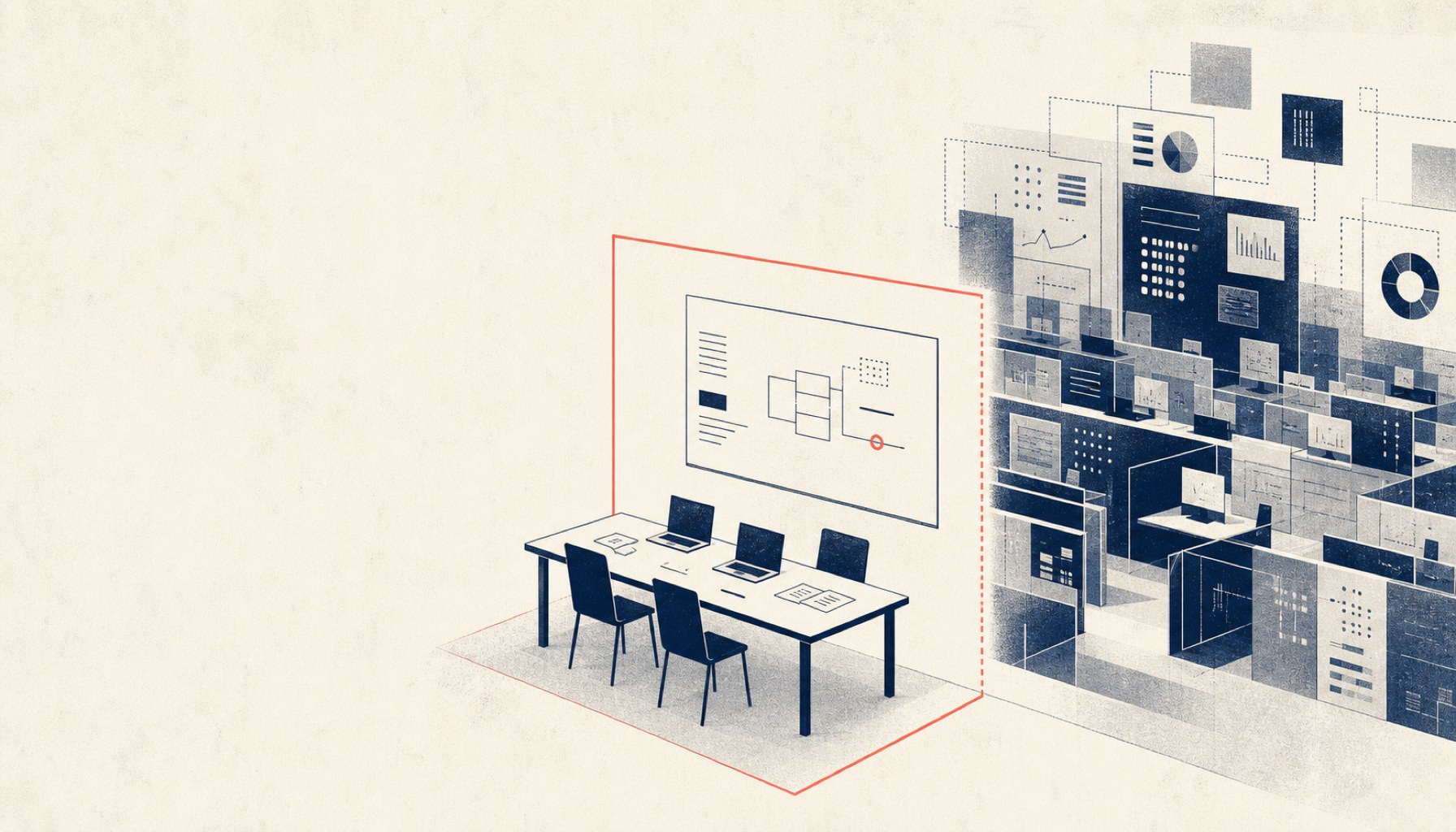
A pilot is a controlled exception. It runs with curated data, a carefully selected use case, and the full attention of the best people. Regular operations are the opposite: fluctuating data quality, many parallel users, limited budgets, and no more project glamour. What works in the pilot mainly shows that it can be done in principle. It says little about operational maturity.
The numbers underline this. Gartner forecasts that a significant portion of AI initiatives will fail due to a lack of AI-ready data, and that many GenAI projects won’t survive the testing phase. For CIOs, this means: success in the pilot is not a guarantee of success in production. The following four stumbling blocks determine whether a project bridges the gap. A concise overview with three central levers is provided in the analysis why the majority miss the leap.
In the test, a clean excerpt is enough. In production, the model faces the full reality of enterprise data: duplicates, missing fields, outdated master data, systems never designed for machine learning. This is precisely where Gartner identifies one of the main reasons for failure-namely, the lack of AI-ready data.
The consequence for the transition is clear. Before a model goes live, it needs a reliable data pipeline with quality control instead of manual exports from the pilot phase. Those who only clean up the data foundation after rollout operate a model whose results no one trusts.
In the pilot, responsibility is clear: the project team. After that, it becomes diffuse. Who monitors model quality, who reacts to drift, who decides on an update? Without clear ownership, the model becomes orphaned, and its quality declines unnoticed. The Logicalis CIO Report clearly highlights the gap: AI budgets are rising broadly, yet only 14 percent have clarified who bears responsibility.
Regular operation demands roles that did not exist in the project: model owner, monitoring, and an escalation path. At its core, this is an organizational question. CIOs who fill these roles before rollout avoid the silent decline after go-live.
A pilot is cost-effective because it is small. In production, inference costs, infrastructure, and maintenance scale with usage. Suddenly, the bill comes into focus, something no one accounted for in the demo. How quickly GenAI spending escalates and which questions justify the rollout are shown in the analysis GenAI Costs Explode: Who Pays the Bill?.
For production deployment, the business case must include operating costs from the start, beyond pure project costs. A model that costs more per query than it saves should not be in regular operation. This calculation must be done before rollout, so it doesn’t later lead to decommissioning.
AI Projects in Numbers
at least 30 % of GenAI projects are abandoned after the proof of concept, according to Gartner.
around 80 % of AI projects fail to deliver the expected business value, according to RAND.
14 % of companies have clarified who is responsible for AI, according to Logicalis.
The fourth stumbling block lies with people. A technically functioning model fails when the workforce bypasses it. Employees distrust recommendations they don’t understand, and revert to their old workflows. Then the model runs, but no one uses it.
Therefore, production deployment needs more than a deployment. It needs training, transparency about the model’s boundaries, and honest communication about what the AI decides and what the human does. Skipping this part results in a costly tool with no impact.
| Dimension | Pilot | Regular Operation |
|---|---|---|
| Data | curated slice | pipeline with quality control |
| Responsibility | project team | model owner and monitoring |
| Costs | manageable | scale with usage |
| Acceptance | enthusiasm within the team | change across the board |
The shared lesson from these four stumbling blocks: the step from pilot to regular operation is a distinct phase with its own budget, roles, and key performance indicators. Anyone who treats it as a mere appendage to the pilot systematically underestimates it. CIOs who plan it for what it truly is significantly increase the likelihood of success.
In concrete terms, this means establishing four prerequisites before rollout: a production-ready data pipeline, a designated model owner with monitoring capabilities, a business case that includes operating costs, and a change management plan for users. These four points bridge the exact gap where the majority of projects get stuck.
The budget reveals whether a company has truly grasped this. If the entire investment flows into the pilot and nothing is reserved for the transition, failure is preordained. A rough rule of thumb from past projects: the effort required for production deployment often matches the scale of the pilot itself, and sometimes exceeds it. CIOs who openly declare this in their investment requests protect themselves against awkward requests for additional funding that leave a project vulnerable at the worst possible moment. The transition deserves its own line item in the budget, its own accountability, and a dedicated milestone where the decision to continue or abort is made.
Because a pilot only demonstrates feasibility. In everyday operations, the model then faces fluctuating data quality, unclear responsibilities, rising costs, and a lack of acceptance. According to Gartner, at least 30 percent of GenAI projects are abandoned after the proof of concept.
A production-ready data pipeline with quality control. Without reliable data, the model will deliver results in operation that no one trusts, undermining the entire implementation.
A designated model owner with a clear monitoring and escalation path. According to Logicalis, only 14 percent of companies have clarified who bears responsibility for AI, and this exact gap leads to silent deterioration.
By ensuring the business case includes operating costs from the very beginning. Inference, infrastructure, and maintenance scale with usage and must be calculated before the rollout, not after.
A crucial one. A technically functioning model remains ineffective if the workforce bypasses it. Training, transparency, and clear communication about the limitations of AI are all part of the transition.
Previously on Digital Chiefs
Digital ChiefsSilent Deindustrialization: the Missing Successor EcosystemDigital ChiefsGeopolitics Meets the Data Center Roadmap: What CIOs Must Secure NowDigital ChiefsRecords Management as a CIO Topic: Why Governance Ownership is NeededMore from the MBF Media Network
Image source: AI-generated (June 2026)
Images in article: AI-generated (May 2026)
7 min. read Germany loses economic substance every year without anyone accounting for it. Around 114.000 ...
Read Article
6 min read Two seemingly unrelated developments are now converging on the same blueprint: the escalation ...
Read Article
7 min read In most companies, no one has ever answered the question of who actually owns the responsibility ...
Read Article
7 min. read Sovereignty features in most presentations as a values argument: control over data, independence ...
Read Article
7 min. read A transformation pitch rarely promises too little. It promises the wrong things in the right ...
Read Article