Schwarz Backs Cohere: What Aleph Alpha Customers Do
Benedikt Langer
The Schwarz Group leads Cohere's funding round. At the same time, Cohere describes its North platform ...
 Read Article

On 3 September 2026 at the ContainerDays in Hamburg, Kubermatic CEO Sebastian Scheele recommended already running selected applications on an additional platform. This way, teams gather experience with an alternative before a complete switch becomes necessary.
Key takeaways
RelatedSovereign cloud: When the price premium really pays off / Site IT: Germany mode instead of cloud dogma
What is a second platform? An additional environment that is already in operation, on which selected applications run in parallel with the existing infrastructure and a later switch can be tested in practice.
Sebastian Scheele begins the sovereignty question with the importance of the respective business. How critical is the operation, and how much vendor dependence can an organization bear? The CEO and co-founder of Kubermatic spoke with Tobias Massow about this at the ContainerDays in Hamburg. His proposal is to run suitable parts of the infrastructure on an additional platform at an early stage.
For him, a complete exit from the large providers does not automatically follow from this. Companies could first move part of their applications and gather experience with an alternative in the process. Even a later complete switch would still be work, says Scheele. But then it would begin on a foundation that has already been tested in practice.
“No matter what happens, I already have a plan.”
Sebastian Scheele, CEO and co-founder of Kubermatic.
A second vendor in procurement does not yet create an operable alternative. A second platform only eases the switch once data transfer, application startup, and access work for the selected applications.
Scheele himself narrows the scope of his proposal. He considers running two different email providers in parallel difficult and of little value. In the infrastructure area, by contrast, he sees room to maneuver for multiple providers more often. His recommendation therefore applies to each area of use and does not transfer across the board to every service.
A second infrastructure also needs staff, ongoing maintenance, and clear responsibilities. How high this additional effort turns out to be depends on the applications and the technical proximity of the two environments.
For which applications is the additional operation worthwhile in order to prepare a later switch? This question belongs in budget planning. A suitable documentary proof would be an actual move that has been tested in practice, with a documented duration and the dependencies identified.
Checklist for the trial run
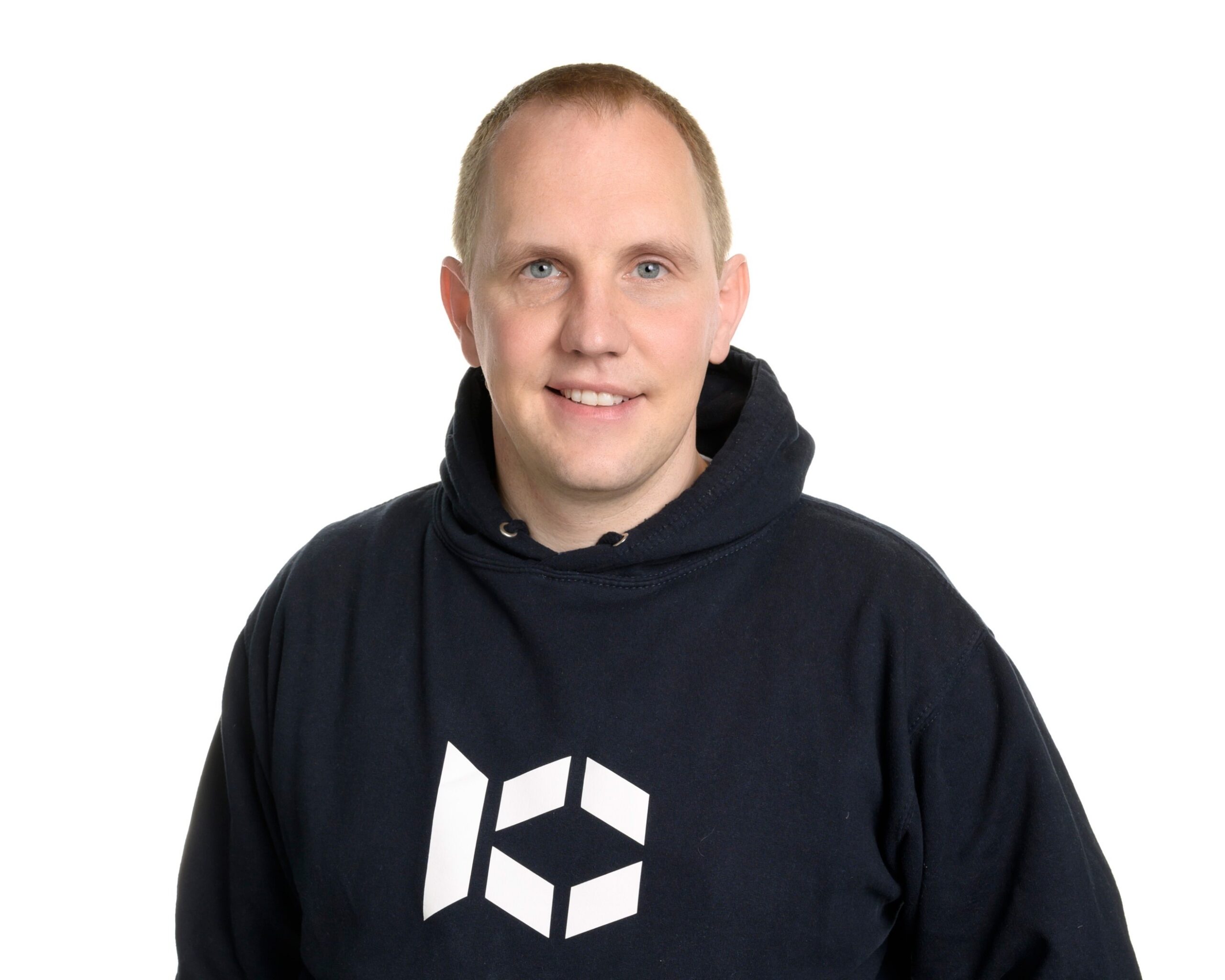
Asked about STACKIT, IONOS, and trustee models, Scheele answers: “Rather cooperation partners.” Kubermatic supplies software, he says, and does not run a managed service itself. Its customers could thereby manage their environments with different providers as well as in their own data center.
In this picture, the large international clouds also remain part of the infrastructure. Scheele reports that customers run their applications there and at the same time need an overview of several environments. The recommendation for a second platform thus fits the business of a software vendor that wants to make such environments manageable.
A second platform alone, however, does not answer any legal question. Which contract terms and legal access options apply has to be examined separately for the providers and services involved. The technical switching plan first describes the operational ability to act.
In the conversation, Scheele names the defense industry as a field in which Kubermatic will become more active. He justifies this with the need for European delivery capability and less dependence on external providers. At the same time, he explicitly describes the sector as economically interesting for his company. Scheele links this to the aim of strengthening European vendors that can deliver such systems.
For Scheele, whether a European cloud provider becomes successful depends to a large extent on the usability of its product. With AWS, he points to its appeal to developers and an easy-to-use programming interface. Developers decide early which environment a new project starts with. This decision then influences operations.
For teams to be able to switch technically, they also have to be able to work with the alternative offering. It has to be usable in their day-to-day work. An additional platform that was procured but is hardly used or maintained does not yet provide a robust switching plan.
An additional environment that is already in operation, for suitable parts of the infrastructure. It is meant to make a later switch easier.
No. Scheele considers a gradual shift of selected applications sensible and names email as a counterexample to parallel operation.
No. Technical operability does not replace an examination of the specific providers, contracts, and legal requirements.
Source: Face-to-face conversation between Tobias Massow and Sebastian Scheele, CEO and co-founder of Kubermatic, on 3 September 2026 at the ContainerDays in Hamburg.
Read more on Digital Chiefs
Digital ChiefsThe quiet infrastructure crisisDigital ChiefsMission-Ready Edge InfrastructureDigital ChiefsAI spending rises; only one in five firms has scaled itMore from the MBF Media Network
cloudmagazinIn the service of infrastructure: How multi-agent systems make IT operations manageable MyBusinessFutureSite selection: Energy price beats highway location SecurityTodayOpen code from X does not stop Europe’s requirement to provide evidenceImage source: AI-generated (October 2026), portrait: Kubermatic
Translated from the German original using artificial intelligence. The German version is authoritative.
The Schwarz Group leads Cohere's funding round. At the same time, Cohere describes its North platform ...
Read Article
Among EU countries, Germany was the country where Microsoft customers were most frequently affected ...
Read Article
AI literacy is entering performance reviews and job interviews. Yet only 24 percent of surveyed employees ...
Read Article
Google's “AI contribution pilot” pays around 100 digital publishers for the extent to which their ...
Read Article
AdvertisementIn partnership with BRESSNER Technology, a HIPER Global Company Industry, healthcare and ...
Read Article