Deloitte: 14 Percent of Firms Hit Their Savings Target
Tobias Massow
This article is an AI-generated translation of the German original. The German version is authoritative. 4 ...
 Read Article

6 Min. Read Time
The machines are connected and the sensors are delivering, but the promised efficiency leap still doesn’t materialize. In most Industry 4.0 projects, this is due to the gap between sensor and business value: the process model that turns machine data into a decision. Edge and IoT are rarely the bottleneck.
Key Takeaways
Related:Connecting Data Spaces / Industry Infrastructure from Hannover Messe
What is Industry 4.0? Industry 4.0 refers to the networking of production and IT, where machines, sensors, and business systems exchange data and partially control processes autonomously. The crucial part is the question of whether an action is taken based on the data.
In practice, this is where the world of production technology meets the world of IT. Operational Technology, i.e., machine controls and sensors, has been a closed domain with its own protocols and security understanding for decades. Classic IT comes from the opposite direction, with standardization, cloud, and short update cycles. Industry 4.0 forces both worlds together, and most projects and problems arise at their interface. With NIS2, this interface gains additional weight, as securing OT systems becomes a regulatory requirement for many industrial companies in the DACH region.
For a CIO, this means the exciting question is not which sensor is installed. It is which business process should be improved by the data. Predictive maintenance, real-time quality control, more flexible order control. Only this purpose determines which architecture fits underneath.
The central architectural decision in every Industry 4.0 project is the distribution of processing. Edge computing means processing data directly on or near the machine. The cloud aggregates it centrally. Both have their place, and the art lies in conscious division rather than a fundamental decision for one side.
| Criterion | Edge | Cloud |
|---|---|---|
| Latency | Milliseconds, for real-time evaluation on the machine | Higher, dependent on the connection |
| Bandwidth | Filters locally, saves transmission | Requires stable line for raw data |
| Evaluation across plants | Locally limited | Strength in aggregated analyses |
| Data sovereignty | Sensitive data stays on-site | Requires clear governance |
The rule of thumb from many projects is: What needs to be evaluated in real-time close to the machine belongs at the edge. The hard control remains in the machine control, i.e., in the PLC. What is analyzed across plants and time periods belongs centrally in the cloud or a private cloud. It becomes expensive if this division remains unplanned in the pilot project and all raw data end up centrally because it was the easiest thing to do in the short term.
Here, the optimistic view deserves an honest counter. Edge hardware, IoT platforms, and connectivity are available and affordable, but the effort lies in integration. Protocol diversity, OT security, and stable operation at the interface slow down many plants. And even clean technology doesn’t generate business value on its own. A PwC study on AI returns shows a related pattern: A small part of companies extracts a disproportionate share of returns from their data and AI projects, while the majority stagnates in pilot projects. The mechanism applies to Industry 4.0 because the value is also created here in the process that reacts to sensor data.
The difference rarely lies in better hardware; it lies in the process model. Who exactly knows which decision a data point should trigger and who reacts to it in operations builds an architecture with purpose. Sensors without this clarification finance a dashboard that no one uses for decisions. Business process modeling is thus the blueprint that technical architecture is based on.
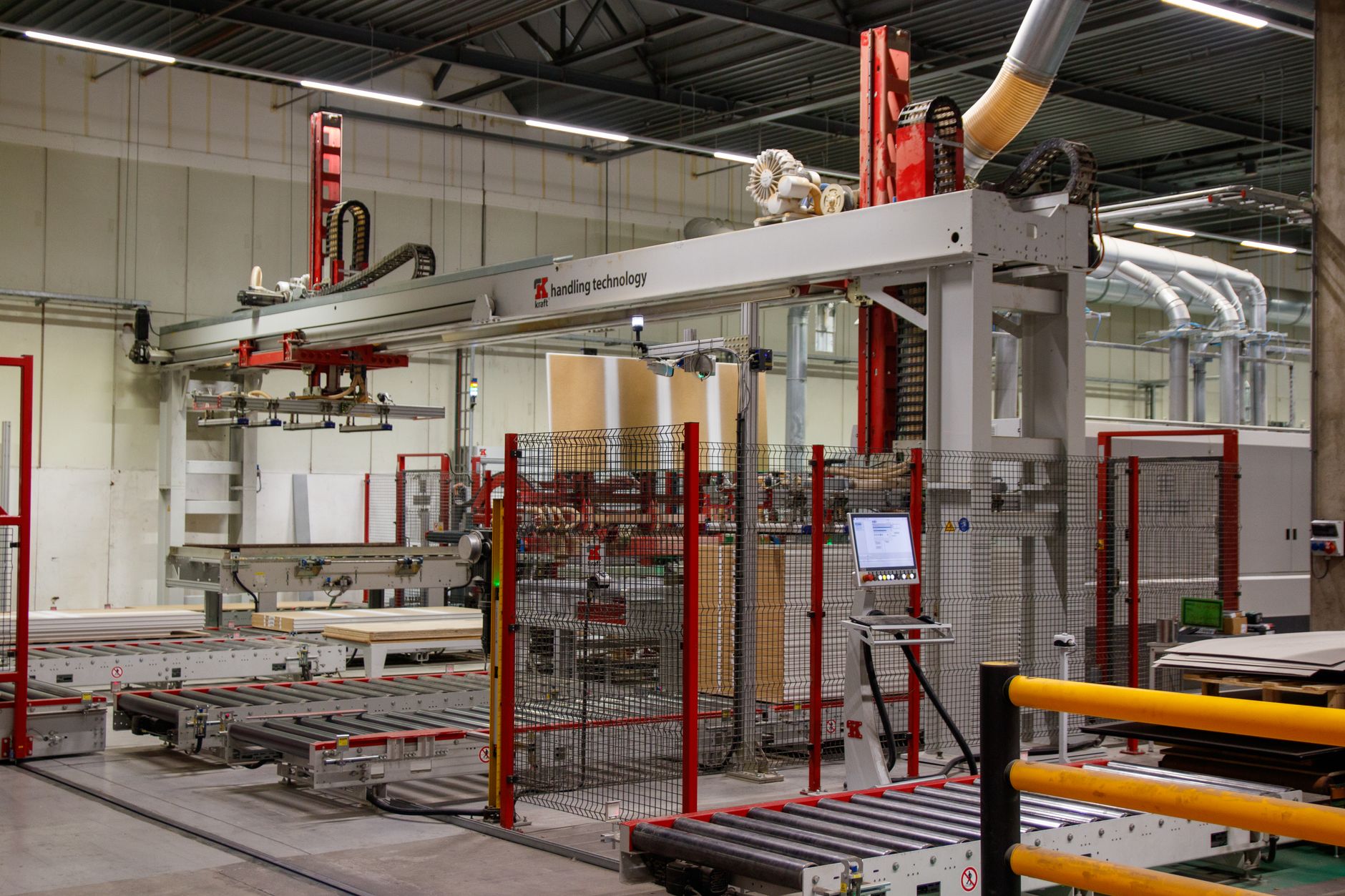
Drawing from the experience of failed and successful projects, a concise starting point can be derived that does not require a large budget.
This approach keeps the initial project small and makes its value visible before the budget for a large rollout is available. A proven success in one process leads to the architecture for the next, with a utility proof that the management understands.
Edge computing processes data directly on or near the machine, enabling low latency and local data sovereignty. The cloud aggregates data centrally and excels at evaluations across multiple plants and time periods. In practice, both are combined.
Usually due to the lack of connection between machine data and a business process. If no concrete decision is linked to the data, a dashboard without impact results.
The convergence of Operational Technology, i.e., machine control and sensors, with classical IT. Both worlds have different protocols and security cultures, whose coordination determines the success of a project.
Not with either as a principle, but with the process. The required response time and type of evaluation determine which part belongs to the edge and which to the cloud.
The CIO ensures that the architecture is aligned with the business process and that OT and IT jointly take responsibility for operation and security. This control determines whether individual projects evolve into a scalable platform.
Read more on Digital Chiefs
Digital ChiefsDigitalization as a CIO Matter: The Costly DACH ReflexDigital ChiefsFour Stumbling Blocks: Why AI Projects Fail to Transition to Regular OperationsDigital ChiefsSilent Deindustrialization: the Missing Successor EcosystemMore from the MBF Media Network
cloudmagazinCADA: When Cloud Sovereignty Becomes a Procurement Requirement mybusinessfutureShadow AI in the Mid-Market: What the Covert Use Reveals securitytodayZombie Accounts: The IAM Blind Spot in OffboardingImage source: AI-generated (June 2026)
This article is an AI-generated translation of the German original. The German version is authoritative. 4 ...
Read Article
This article is an AI-generated translation of the German original. The German version is authoritative. 4 ...
Read Article
This article is an AI-generated translation of the German original. The German version is authoritative. 5 ...
Read Article
4 min read Nvidia is acquiring Hugging Face for around 11.1 billion euros; the contract was signed on ...
Read Article
4 min read SAP has documented the first Embodied AI Jam at the Swiss Smart Factory in Biel. Inspection ...
Read Article
6 min read On 13 August 2026, OpenAI described Computer History for the ChatGPT Mac app in its release ...
Read Article