Deloitte: 14 Percent of Firms Hit Their Savings Target
Tobias Massow
This article is an AI-generated translation of the German original. The German version is authoritative. 4 ...
 Read Article

This article is an AI-generated translation of the German original. The German version is authoritative.
Christian Klein promises over 400 AI agents for complex business processes and insists they will only run on SAP’s cloud and S/4HANA, the latest ERP generation. According to him, 60% of installed systems still lack these prerequisites.
Key Takeaways
RelatedOracle Makes Customers Prepay for AI Expansion / McKinsey: 8 in 10 Companies Faster with AI, EBIT Unchanged
On September 8, 2026, SAP CEO Christian Klein took the stage at the Goldman Sachs Communacopia + Technology Conference in San Francisco, where Mohammed Moawalla, an analyst at Goldman Sachs International, spoke with him. Larry Dignan of Constellation Research captured the key takeaways two days later.
Klein’s focus: deploying AI agents for high-stakes business challenges. Routine tasks? Those go to generic language models. Independent agents will crunch supply chain and sales data for financial forecasting. On stage, he framed the vision bluntly: Let the agents run the business. Humans should focus on what truly matters.
For the second half of 2026, Klein pledged over 400 AI agents and a new business AI platform plus 50 AI assistants. Bloomberg broke the news on 13 September 2026.
The 400 remain a corporate promise. No delivery manifest exists yet.
SAP now faces a dual timeline: agents must become technically robust while customers upgrade their ERP landscapes. Access to these features hinges on how far along clients are with their cloud transitions.
Christian Klein emphasizes that AI use cases require moving to the cloud and adopting SAP’s S/4HANA. S/4HANA is SAP’s latest ERP generation, where finance, procurement, manufacturing, and HR operate on a unified data foundation. Without this transition, the promised AI agents remain outside the existing installation.
Klein stated at the conference that 60 percent of installed SAP systems are still not cloud-based, according to Constellation Research’s direct quote. The bottleneck lies in migration progress. Agent deployment follows afterward.
SAP distinguishes between Joule Agents and Joule Assistants on the product side. Agents automate workflows, while assistants capture intent and coordinate multiple agents. The AI Agent Hub consolidates discovery, deployment, and control. The cloud requirement remains unchanged, as Klein himself underscores.
| Category | Figure | Source |
|---|---|---|
| AI Agents (Second Half of Year) | More than 400 | Management commitment, Bloomberg (13 September 2026) |
| AI Assistants (Second Half of Year) | 50 | Management commitment, Bloomberg (13 September 2026) |
| Joule Work Customers | 150 | Christian Klein, Constellation Research (10 September 2026) |
| Installed Base Without Cloud | 60 Percent | Christian Klein, Constellation Research (10 September 2026) |
Source: Christian Klein at the Goldman Sachs Communacopia + Technology Conference on 8 September 2026, documented by Constellation Research on 10 September 2026. The figures of 50 assistants and more than 400 agents come from Bloomberg’s coverage on 13 September 2026.
Klein acknowledges delays. The platform could have launched in early 2026, but he’s postponing general availability until SAP fully controls the lifecycle, the agents work more accurately, and governance rests within SAP. Customers don’t want unmanaged agent proliferation, he explained.
SAP, partners, and customer-built agents will be managed on the new platform, a key differentiator, Klein says. Joule Studio remains model-agnostic, with SAP planning to integrate multiple language models once control and accuracy are validated.
Customers ask whether agents have read, edit, or write permissions. Compliance requirements like FedRAMP in the U.S. and German regulatory obligations are built into the ERP, but a self-built agent, according to Klein, doesn’t inherently comply. Those orchestrating agents outside SAP’s platform must address permissions themselves.
According to Klein, Joule Work plays a pivotal role and has 150 customers to date. Joule Work is the workspace where users articulate an intent and agents execute it across systems. These 150 customers represent ongoing adoption.
The number of Joule Work customers reflects the usage of this product alone and should not be confused with the share of SAP’s entire installed base that is in the cloud.
On 13 May 2026, at Sapphire, Klein unveiled the SAP Business AI Platform and the vision of the Autonomous Enterprise. Knowledge Graph and Domain Models are designed to guide agents through processes and data fields. The September announcement shifts the narrative: while the platform announced in the spring remains on the horizon, general availability remains intentionally unspecified.
The platform is also intended to integrate data beyond SAP’s ecosystem. For existing customers, Klein’s cloud prerequisite remains: connecting external data does not replace ERP system migration.
Bloomberg reported on 13 September 2026, citing sources familiar with discussions, that Supervisory Board members expected a breakthrough in AI within the coming months or SAP would risk falling painfully behind competitors. Optimists estimate two years, others just one. This is neither an investor relations statement nor a formal resolution.
Klein dismisses the notion that SAP is lagging behind the market. Yet, the promise of scale and the pause on general availability coexist. SAP ties the rollout of numerous agents to conditions for their widespread deployment.
What is S/4HANA? S/4HANA is SAP’s current ERP generation. Finance, procurement, manufacturing, and HR all operate on a unified data foundation. Christian Klein links the promised AI agents to cloud-based operations on this platform.
Christian Klein ties these AI cases to the shift to the cloud and S/4HANA. According to him, 60 percent of the installed base still hasn’t migrated to the cloud. Without this move, the volume promise remains outside the current systems.
Klein states the platform could have been delivered by early 2026. However, he’s delaying general availability until SAP controls the lifecycle, the agents work more accurately, and governance rests with SAP. Customers didn’t want to manage their own patchwork of agents.
Klein announced over 400 agents for the second half of the year, along with a new business AI platform, a pledge from the corporate leadership. Joule Work, according to Klein, serves 150 customers.
Read more on Digital Chiefs
Digital ChiefsNvidia Buys Hugging Face for Over 11 Billion EurosDigital ChiefsSAP Lets Joule Steer Robots Directly, Liability Still OpenDigital ChiefsChatGPT wants to read the MacMore from the MBF Media Network

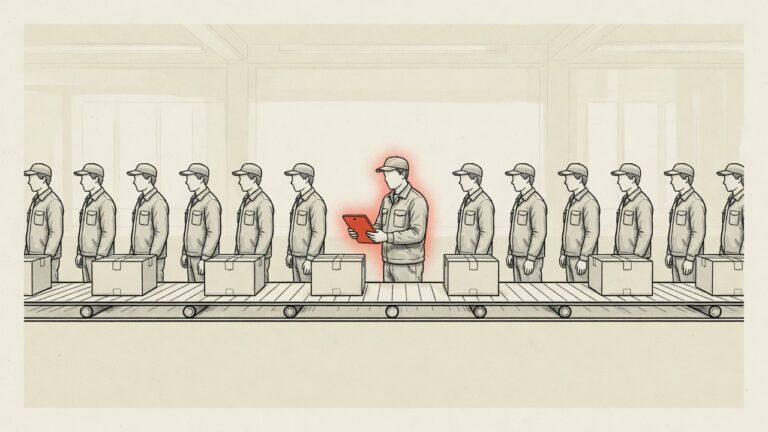

Image source: AI-generated (September 2026)
Translated from the German original with AI support. The German version is authoritative.
This article is an AI-generated translation of the German original. The German version is authoritative. 4 ...
Read Article
This article is an AI-generated translation of the German original. The German version is authoritative. 4 ...
Read Article
4 min read Nvidia is acquiring Hugging Face for around 11.1 billion euros; the contract was signed on ...
Read Article
4 min read SAP has documented the first Embodied AI Jam at the Swiss Smart Factory in Biel. Inspection ...
Read Article
6 min read On 13 August 2026, OpenAI described Computer History for the ChatGPT Mac app in its release ...
Read Article